


How to Choose Between Hair Implant and Transplant?
July 6, 2022
Can I Exercise After Hair Implant Treatment?
September 7, 2022Oily Scalp: Causes, Prevention, and Solution

Oily Scalp: Causes, Prevention, and Solution – They say, “hair is our crowning glory.” True enough, it can make a lot of difference to our physical look. However, healthy hair could not be possible without a healthy scalp. Thus, it all boils down to the importance of proper scalp care.
Just like how we do so much for our skin- cleanser, toner, serum, moisturizer, we must also do so much for our scalp to keep it clean and healthy. We may not notice it, but we may be doing some usual activities that have already caused damage to our scalp. One of the problems that our scalp may encounter is getting oily.
Having a little oil on our scalp at times is okay and can be beneficial. It helps to protect and support healthy hair. However, excessive oil on the scalp may pose a problem as it will make you feel greasy and dirty leaving you uncomfortable. It may also be a symptom of a skin disorder.
How do you know if your scalp has gone secreting excessive oil? First, you will still feel oily even after washing it. It can also become itchy and you may observe some flakes forming on your scalp. It also makes your hair appear dull and lifeless. It may look shiny but you would know it is not in a good way. You may try to dab your scalp with a tissue and observe if a large portion of the tissue has a stain of oil. If it has, then you know now you have an oily scalp.
We all have a scalp that produces a natural oil called sebum which protects and hydrates our hair and scalp. There are a variety of factors affecting the amount of oil the scalp produces. This may include the different hair types and the scalp care we apply. There are kinds of hair types that may be prone to having oily scalp, but mostly, it’s the improper practices we make for our hair and scalp.
Read on – Oily Scalp: Causes, Prevention, and Solution:
What Causes Oily Scalp?
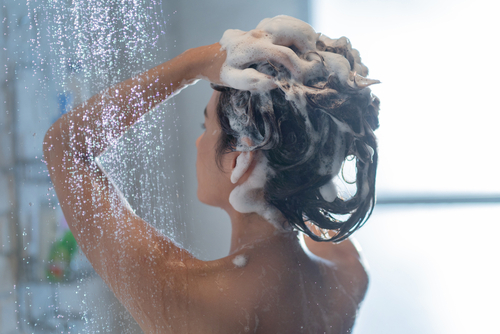
There are a lot of factors causing this problem. Read on as we have listed down the causes of oily scalp.
1. Overwashing your hair
Every time you wash your hair, it sends a signal to the scalp that it should produce the oil called sebum. However, if you do the washing excessively, it might send a signal to the scalp that it should produce more oil than what it usually produces normally resulting in an oily scalp.
2. Genetics or hair type that is prone to oil
There are kinds of hair type that is prone to collecting oil. One of these is having straight hair. It is much more prone than those having curly or wavy hair because the hair shaft of straight hair does not have a texture that impedes the oil from getting down the scalp. Instead, the oil goes directly to your hair shaft down to all over your head.
3. Products we use
Sometimes, there are some hair products we use that may worsen the oil production. For example, some may prefer to only use conditioner without shampoo. Doing this will cause oil to build up. It may not be that visible while you are still drying your hair but you will notice it appears again after a few hours.
The shampoo has an active ingredient that is designed to break the oil build-up. However, over usage of these products may lead to excess oil production. But using too little shampoo as well still leads to greasy hair. Many conditioning agents must be avoided as you wash your hair because it triggers oil production.
For deep cleaning, you may look for a shampoo with ingredients such as lauryl sulfates or sulfosuccinates as this helps to break down oil build-up. Just remember not to overuse or underuse shampoos.
4. Age and hormones
As teenagers go through puberty, they will experience excess oil production. This will make their hair appear greasy which might tempt you to wash again your hair. Some hormonal imbalances due to pregnancy and menstruation may cause excessive sebum production.
5. Excessive humidity and heat
Too much exposure to heat and humidity may trigger oily hair. The oil building up in the scalp will be melted by the heat from the sun or any humidity we may be exposed to.
How to Prevent Having Oily Scalp?
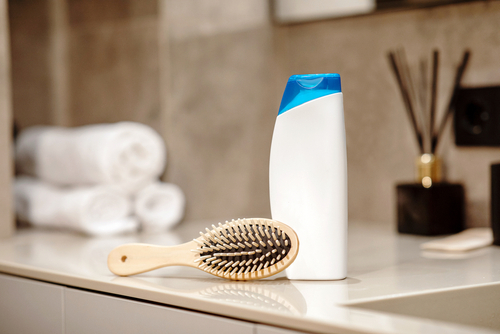
1. Wash more often or wash less often
Anything in excess or lacking is bad. The same way as washing your hair and using hair products. Always wash and use hair products in moderation. If you think you are washing your hair too often, then reduce it, if you think washing has been less often, then wash more frequently.
2. Use shampoo and conditioner properly
We may have used shampoo the wrong way but we are not noticing it. Improper use of any products may cause damage, the same is true with shampoo.
The proper way of shampooing is lathering a small amount of shampoo on your roots and scalp. Do not mind how long your hair is, you must focus on the roots as it is the one producing healthy strands of hair. Do not scrub aggressively using your nails because it can irritate your scalp and sends messages to produce more oils.
Conditioning on the other hand is just putting conditioner at the tip of your hair and washing it thoroughly. If this is not done properly, the conditioner will cause oils to build up faster.
3. Avoid ironing and blow drying
These might do wonders to your hair by making it appear smooth and sleek. But your hair may get greasy as you practice doing this more often. It will result in too much exposure to heat which triggers oil production.
4. Apply products that are intended for oily hair
There are many products specially formulated for oily hair. Clarifying shampoo contains stronger ingredients that can leave your hair grease-free. Or you might want to try a baby shampoo that is gentler and less irritating.
5. Make Sure you have a clean comb or brush
By having a healthy brushing routine, you are evenly distributing the oil to your scalp and hair. This also helps hair to prevent breaking, tangling, or knotting. But if you don’t clean your brush after using it, you are redistributing the oil residue into your hair strands thus causing too much grease.
6. Avoid touching your hair often
Your fingers also produce sebum which can be transferred to your hair if you have the habit of touching it without a purpose. By twirling and raking your hair all day long, it will worsen the oil problem in your hair as it transfers sebum from your fingers to your nails.
7. Have a hair care routine once a week
Having a healthy scalp scrub and exfoliant once a week can help reduce the oil build-up in your scalp. Use a scrub that has a finely ground texture and apply it to a wet scalp as the water serves as the carrier of the scrub. Use the tips of your fingers in a circular motion and gently massage your scrub to exfoliate your scalp. Doing this routine once or twice a week will help your scalp minimize its oil production.
Can Oily Scalp Cause Hair Loss?
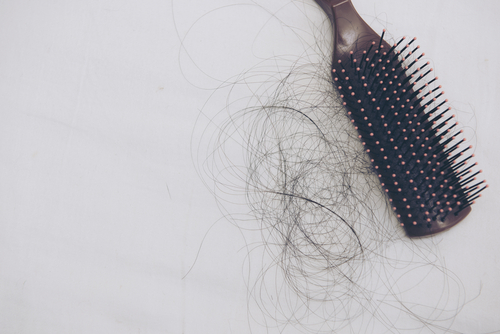
Yes. It may not be the main cause but it can contribute to hair loss. Our hair roots are surrounded by sebaceous glands. As it produces more oil, it can block, inflame, and hardens the pores. Oil can also attract and trap the dirt and clogs the pores, therefore preventing the hair follicle from growing normally. This may result in thinning of hair and soon hair loss.
Oily Scalp: Causes, Prevention, and Solution – Conclusion
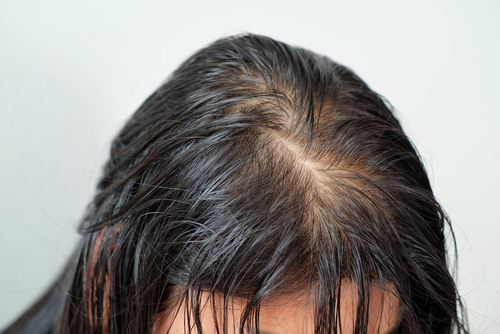
Sebum can make or break our scalp and hair if the product is in excess or lacking. Therefore, it is always helpful to be mindful of the proper hair and scalp care routine to prevent excessive or lack of oil production. It pays to be mindful with the proper hair care as we will surely reap a beautifully shiny and healthy crowning glory that will add wonders to our physical appearance.


